
Why 2026 Will Be the Year of AI Orchestration in Accounting
As accounting firms evaluate artificial intelligence, much of the early attention has focused on tools, chatbots, and AI features embedded into existing software. These efforts have delivered incremental efficiency, but they have not addressed a more fundamental change now underway.
As AI begins to participate directly in the execution of accounting work, firms encounter a new challenge. The focus is shifting from whether AI can assist individual tasks to how accounting work is coordinated, reviewed, and governed when AI operates across multiple steps, systems, and roles.
That challenge gives rise to the Accounting Orchestration Layer.
This layer is not a finished category. It is emerging from real production usage as firms deploy more agents into live engagements. 2026 will be the year when implicit, human-managed coordination begins to be augmented by an orchestration layer that explicitly manages workflows across people, agents, and systems.
For Tellen, 2026 is the point at which orchestration becomes a dedicated layer within Tellen’s Accounting Workforce Agent Platform, built on infrastructure already in production today.
As a result, we predict that 2026 will be the year when AI starts to feel less like software and more like digital teammates.
This perspective is written for accounting firm leaders and investors evaluating how AI will be operationalized within regulated accounting environments over the next several years. It is not intended to document every capability available today, but to describe the execution model that is beginning to emerge as AI moves from isolated use into live accounting workflows.
How the Accounting Orchestration Layer Works
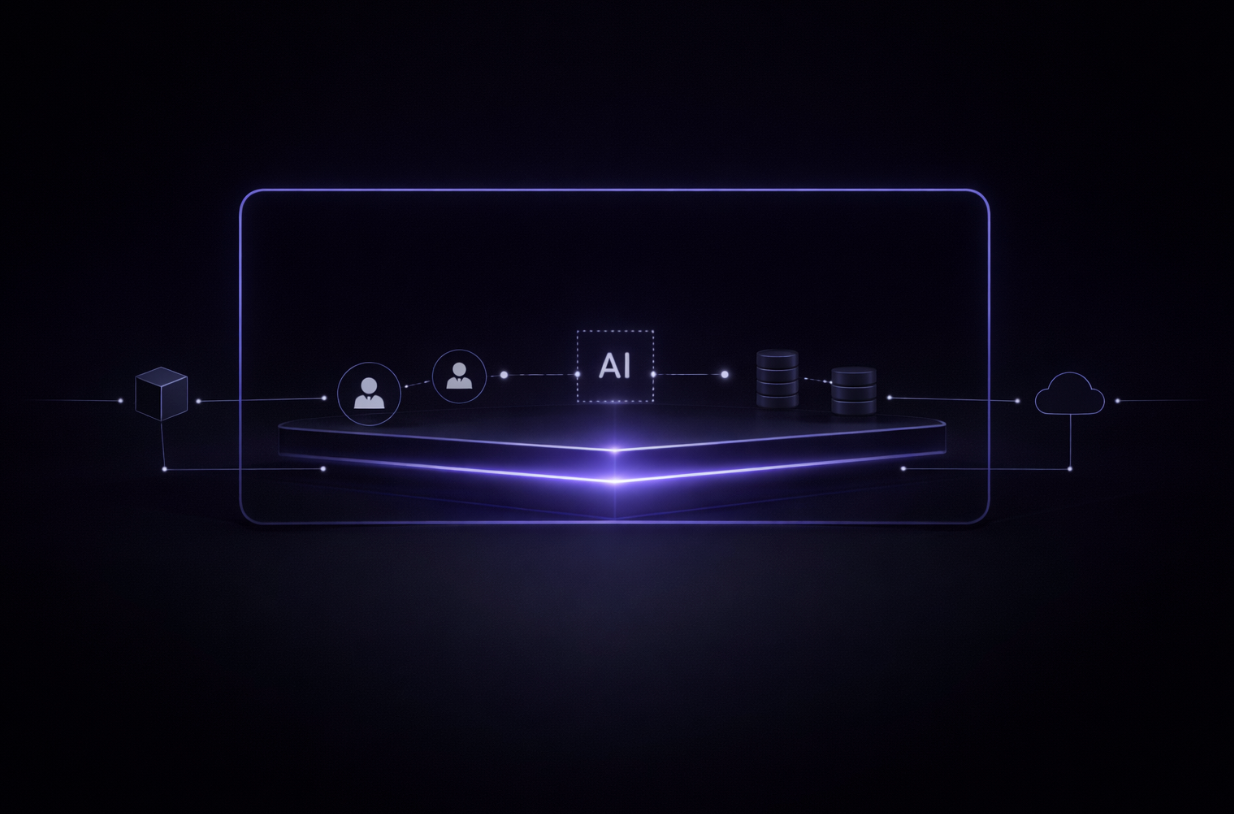
The Accounting Orchestration Layer governs how accounting work is executed when AI participates in the process.
In practical terms, it controls:
- How work is defined, sequenced, assigned, reviewed, and completed across people, agents, and systems;
- Which steps can be handled by AI, and where professional judgment is required;
- How dependencies are resolved, and;
- How evidence and decisions are captured as work progresses.
This layer does not replace audit platforms, ERP systems, or firm tools. Those systems remain systems of record. Orchestration operates above them, coordinating execution across systems and roles, much like senior accountants do today.
If a system only produces outputs, it is not orchestration.
If a system governs execution, review, and accountability, it is.
Why orchestration is emerging now
For decades, accounting orchestration was implicit. Humans managed sequencing, context, review, and handoffs through experience and informal coordination. That model worked because all execution flowed through people.
But AI changes that assumption.
Once firms deploy multiple agents inside live engagements, coordination complexity increases rapidly. Sequencing must be arranged between AI agents and accountants in multi-step workflows; context must persist across steps; reviews must be targeted; and dependencies must be enforced consistently, with exceptions routed to either accountants or AI agents for preparation before review.
Orchestration becomes unavoidable the moment firms move from deploying isolated agents to running multiple AI workflows inside live engagements, because coordination, review, and accountability can no longer be managed implicitly.
This is why orchestration is surfacing now, not as theory, but as a response to friction that we see already appearing in production environments. That is why we see 2026 as the year that this shift becomes unavoidable for our firm and likely for a broad set of firms.
How Orchestration Fits Into Tellen’s Workforce Agent Platform
Tellen is deliberately building an Accounting Workforce Agent Platform, layer by layer. This is not a collection of AI features added over time, but an infrastructure stack designed to allow AI to participate safely and productively in regulated accounting work.
There are four core infrastructure layers inside the Tellen platform. These layers are not presented as a literal technical stack, but as distinct infrastructure domains that together allow AI to participate in accounting work in a governed and reviewable way. Three are already in place and operating in production environments today. The fourth, orchestration, is the layer that will surface explicitly in 2026.
Together, these layers allow AI agents to behave in a governed workforce capacity rather than as a set of disconnected tools.
1. Agent infrastructure
Agent infrastructure is the execution foundation of the Tellen platform.
This layer provides:
- defined agent identities and roles aligned to accounting work
- controlled access to firm and client systems
- security, permissions, and isolation suitable for regulated environments
- lifecycle management for deploying, updating, and retiring agents
- tooling to design and deploy agents and agentic workflows within defined, production-proven use cases
Tellen already operates this infrastructure inside customer-controlled environments. It is what allows firms to build and deploy workforce agents safely within targeted workflows today, and expand over time as orchestration matures.
2. Agent orchestration
Agent orchestration will be the Tellen platform's control plane.
This layer will determine:
- what accounting work runs;
- in what order;
- with what dependencies;
- where human judgment and review are required, and;
- how work moves from one step to the next
Today, Tellen supports early forms of orchestration within individual workflows using our workflow agent builder. In 2026, this layer becomes explicit and first-class, coordinating agents across tasks, systems, and teams.
We expect that this orchestration introduction will become the unlocking point at which agents stop behaving like isolated automations and start behaving as a workforce.
3. Accounting native data model
At the core of the Tellen platform is an accounting-native data model that establishes the foundation for how agents reason over accounting data. This model sets us apart from our competition and from horizontally focused agent-builder platforms because we leverage our expertise as accountants to build the underlying substrate on which all our agents operate. This layer was only made possible after GenAI was introduced because it uses reasoning to understand documents, extract data points, add bounding boxes, and add metadata.
This layer:
- structures unstructured, and semi-structured accounting data
- preserves engagement history and prior period context
- enables consistent reasoning across documents, workpapers, and systems
This data model is already in production and continues to expand as new workflows are brought into the platform. As orchestration expands, this layer becomes even more critical, providing the persistent context that coordinated execution depends on. Tellen will continue to invest heavily in improving our accounting native data model.
4. Traceability
Traceability is the layer that makes AI execution defensible.
Inside the Tellen platform, traceability captures:
- inputs and source references
- intermediate steps and decisions
- outputs and conclusions
- timestamps, reviewers, and approvals
Traceability is already a foundational requirement for operating inside audit and other regulated services. Today, Tellen can trace data points back to the exact source in documents across every output from the Tellen platform. Over time, we expect traceability to deepen, supporting clearer explanations of how conclusions were reached, what documentation was available, and what evidence was used during execution. As orchestration becomes more explicit in 2026, the need for traceability will deepen significantly as more work is coordinated, sequenced, and reviewed across agents and systems.
Why this architecture matters
Tellen did not start with orchestration. It started by laying the foundation for orchestration to operate safely.
Agent infrastructure, an accounting native data model, and traceability are already in place and being hardened through production use. The orchestration layer surfaces on top of these foundations as firms move from isolated agent workflows to coordinated execution.
This sequencing matters. It is what allows orchestration to work in accounting, rather than breaking under scrutiny.
Why firm leaders should care
For firm leadership, the importance of orchestration extends beyond audit efficiency. Orchestration is what allows AI-supported work to expand across front-line services without fragmenting execution or governance.
As orchestration matures, firms can coordinate AI participation across audit, tax, advisory, and financial reporting workflows using the same execution logic, review controls, and traceability standards. This reduces duplication, preserves context across services, and allows teams to collaborate through shared infrastructure rather than disconnected tools.
Over time, this same orchestration layer extends beyond the firm boundary. As accounting firms increasingly support ongoing finance operations for their clients, AI workflows can be coordinated between firm teams and CFO organizations through shared context, defined handoffs, and clear accountability. This is not a handoff to a different system, but a continuation of orchestrated execution across the accounting and finance lifecycle.
The result is meaningful margin expansion in audit and other labor-constrained service lines, without compromising quality or professional accountability.
Orchestration Layer.png
The long-term implications for AI strategy
The Accounting Orchestration Layer is emerging because accounting firms need a durable way to integrate AI into how work is actually performed.
An Accounting Workforce Agent Platform provides the foundation for that future. It allows firms to establish a single execution model for AI, anchored in audit, eventually extended across front-line services, and coordinated with the CFO organizations they serve. The same orchestration logic governs work inside the firm and across firm-client boundaries, preserving standards, traceability, and accountability as scope expands.
This is how AI moves from isolated efficiency gains to an operating model that supports firm growth and deeper client engagement. Firms are not adopting a point solution for one service line. They are building infrastructure that allows AI participation to compound across services and into the finance function over time.
In 2026, we expect our clients to shift from simple agents and rudimentary multi-agent workflows to multi-agent systems, that empower collaboration between accountants and groups of agents across workflows. This will begin to fulfill our vision of a workforce agent platform, and agents will start feeling more like a digital workforce. Firms that establish this foundation early will benefit from compounding knowledge as AI becomes more deeply embedded in accounting workflows. We are still very early in the AI transformation cycle, and early adopters will benefit from compounding knowledge as they deploy AI agents into their workflows. Firms that establish this foundation early will be best positioned to scale with control, confidence, and trust.